|
|
|
|
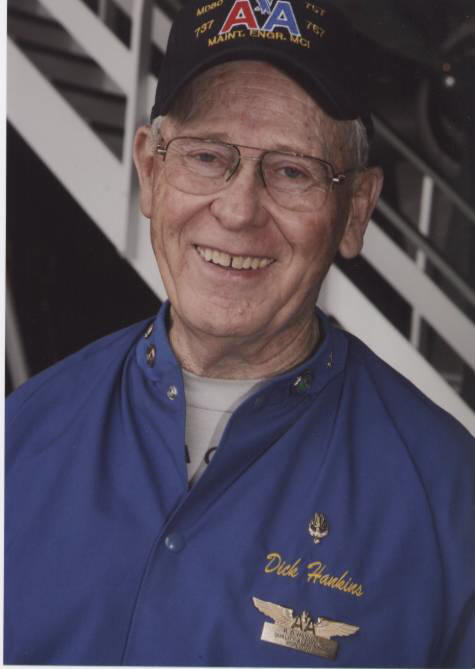
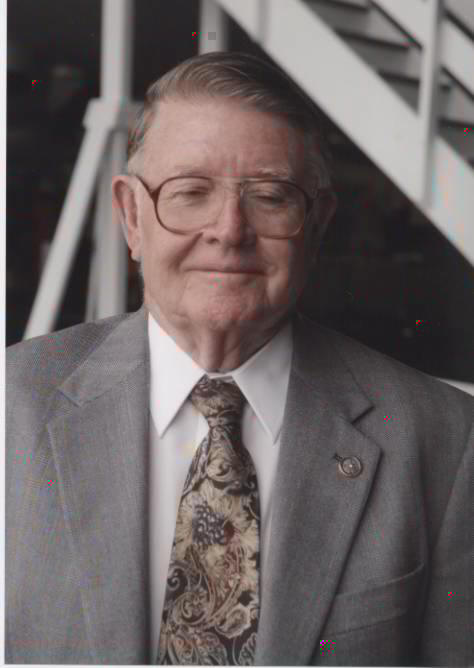
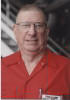
Dick Hankins
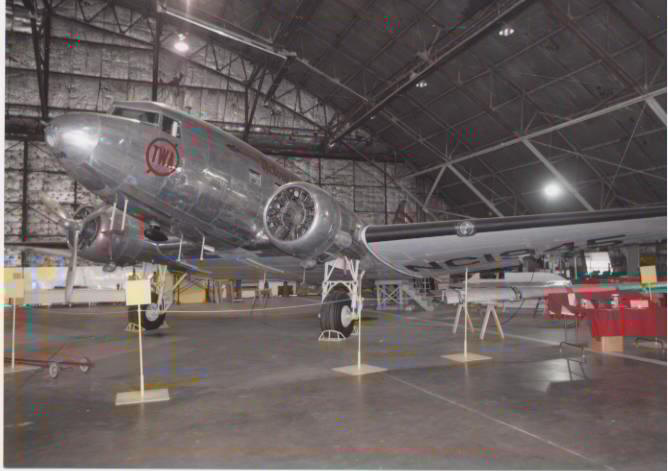
Mr. Hankins began his career April 3, 1951 as a Fleet Service Helper. He then started fueling Connies, DC-3s and DC-4s as well as Martins for Trans Continental & Western Airlines. He bid several times to become a mechanic before finally doing work in engine sub-assembly at Fairfax Airport building B.A. nose cases for Lockheed engines on 049 Connies. He then worked in the engine test cell located in the former Pratte & Whitney Building, with Bendix and Westinghouse. After TWA moved into the facilities he once again worked sub-assemblies. He then returned to Fairfax to work hangar aircraft. Mr. Hankins joined the ranks of inspection on February 12, 1976 and soon therafter became a part of NDT inspection. |
|
|
|
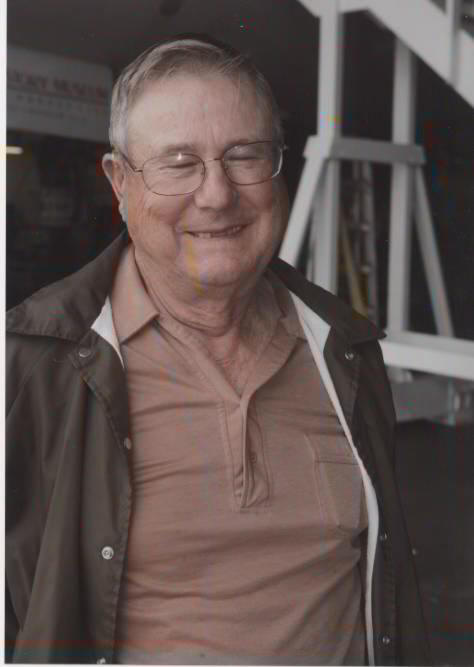
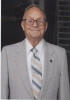
William Dean
William's career began with TWA on June 18, 1953. That affiliation would last until the TWA logo disappeared from the sky some 48 years later. He began cleaning and polishing aircraft, until 1957 when he took a military leave to join the USAF for nearly 5 years. Upon returning to TWA, Bill was promoted to mechanic and went on to earn his A&P license in 1968. January of 1969 Bill moved up to inspection, and then on to Inspection Crew Chief in March of 1990. Bill transitioned to American Airlines as aircraft inspector in April 2001, then retired in December of 2004. |
|
|
|
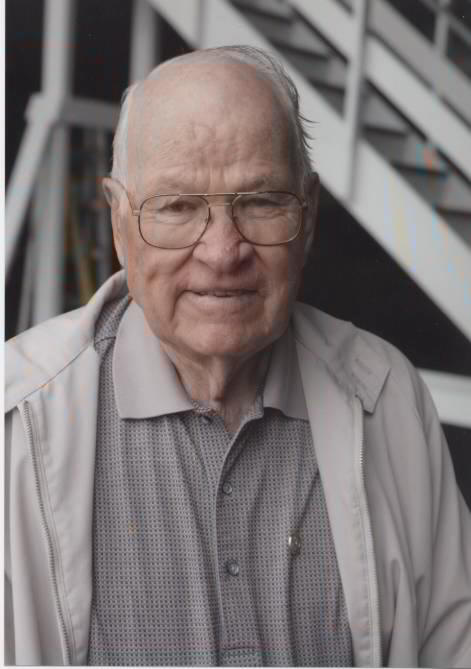
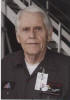
Walter Davis
Walt's career began in aviation with school for aircraft engine mechanics in 1941, before entering the workforce at Curtis Aircraft Co. in 1942. Walter moved on to Douglas to build B-24s in 1943, before enlisting in the USN in 1944. Home again after WWII was ended, Walter was employed by TWA's engine overhaul shop in Kansas City. In another career change in 1948, Walter joined TWA's flight crews as a flight engineer, where he worked until his retirement. Yet another career change found Walter volunteering his vast expertise at "Save-A-Connie" 1983-2003, Kansas City's own historic airline flying museum. |
|
|
|
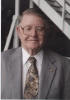
Bernard Koetting
Mr. Koetting began his aviation career on June 4, 1951 by polishing TWA aircraft. He went right to work and to school, earning his aircraft, engine, and private pilot license in just two years. In 1955 he was promoted to Line Mechanic. Since then he has served as an Inspector, Tech. Crew Chief and Lead Systems Technician. Mr. Koetting spent two years of his career to proudly serve his country in Germany maintaining helicopters, light aircraft, control tower operator and teaching link training. Bernie has flown commercially, taught commercial flying, owned 3 private aircraft and he is still going. He is presently a Tech. Crew Chief. |
|
|
|
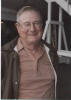
Bill Taylor
Bill's career starts back in May 1943 when he enrolled in the Sweeney Aircraft Sheet Metal School in Kansas City, MO. After training here he was employed by the Civil Service at the US Army Base in Herrington, KS. He performed sheet metal repair on B-17s & B-29s. In 1944 he enlisted in the US Navy and in 1947 he was discharged from active service only to be recalled back in 1950 where he worked on PB4Y & P2V-5A aircraft. Between those years he worked at Boeing Aircraft Co., Baker Aviation & Bendix Aircraft Co. In 1952 he worked for TWA as an A&P till he retired 34 years later in 1986. He continued to use his skills afterwards repairing Cessna and Piper aircraft. |
|
|
|
|
|
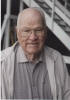
Donald Lusso
Bio. to come soon. |
|
|
|
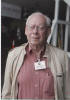
Roy Stewart
Roy began in aviation in 1939 with Glenn L. Martin in Baltimore, MD, on the B-26. In 1942 in the Air Force he worked on P-47s & P-40s. In Guam he worked on B-29s, B-24s, & B-25s as well as P-51s. In 1946 he joined TWA and worked in the metal, engine & hydraulic shops. In 1948 he worked for Boeing on the B-50 and B-47. In 1951 he was again with TWA working on Connies, G-54, B707, Convair 880, B727, DC-9, L-1011 & B-747. His last 15 years with TWA he was a Hydraulic Supervisor. He has enjoyed working with a fine group of mechanics restoring a Connstellation , Martin and DC-3. |
|
|
|
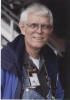
William Cahill
William has held a CAA A&E License from 1947 till 1954 when it was replaced with the FAA A&P License. Beginning his career in 1943 as an apprentice mechanic with Transcontinental & Western Air he worked on DC-2, DC-3, Boeing 307, Stinson Reliant, Lockheed Model 25, North American B-25, Curtiss C-46 & Cessna U-78. In the US Navy in 1943 he returned any type of mechanically grounded navy aircraft back to service. Returning to TWA in 1946 he worked in the engine overhaul, electrical and metal shop, & airframe overhaul. He has been an aircraft & engine inspector and also an inspector instructor. He helped develope the maint. program for the B767. Retired in 1982 he restored a Lockheed H Super Constellation, Martin 404 & a DC-3 aircraft. |
|
|
|
Virgil Doyle
Mr. Doyle joined aviation on August 30, 1952 as a cleaner for TWA. During the Korean War he served in the USAF. He entered the aircraft & engine technical school at Shepard AFB in Texas. After graduation, April 27, 1954, Mr. Doyle came home on leave and took his FAA Airframe & Powerplant license examination. He finished his tour of duty working military aircraft, and came back to his cleaner position at TWA on April1, 1957. Mr. Doyle was promoted to Mechanic on August 5th of that year in the power plant building. He worked hangar line before the USAF 442nd Troop carrier Wing summoned him back for 11 months. Back home, he soon became an aircraft lead, then on to Lead Mechanic. He is currently a Tech. Crew Chief with American Airlines.
|
|
|
|
Preston Jones
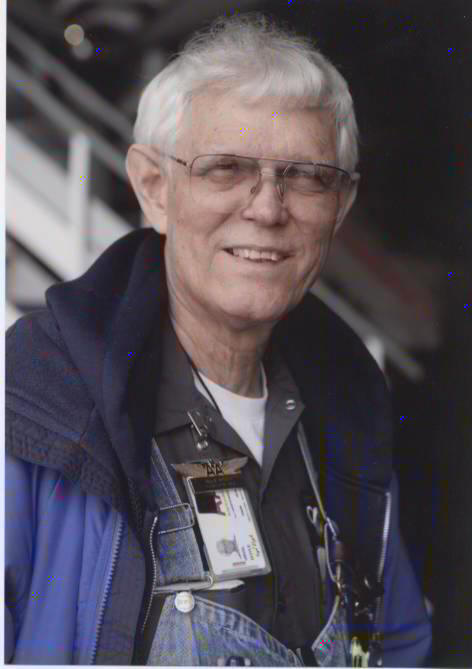
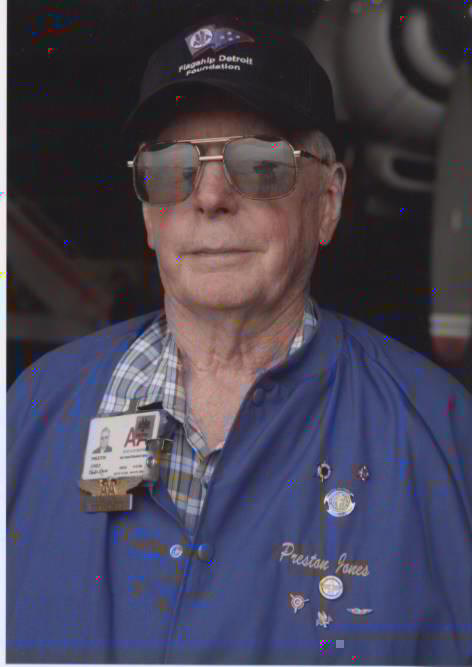
Preston began his career in aviation when he was 17, when he enlisted in the USAF. This career spanned fifty years plus, working for six commercial airlines as a mechanic and then inspector. He has performed maintenance on numerous military type aircraft, commercial passenger and cargo airplanes, private aircraft, and historic vintage flying machines. One such aircraft is a Ford Tri-motor on display in the Smithsonian Museum. Preston has also been instrumental in restoration and maintenance of the "Flagship Detroit", a 1937 DC-3 flying museum in American Airlines' colors. |
|
|
|
|
|
Richard Wilson
At 4 years old Richard knew he wanted to be an Aircraft Mechanic after watching a white overall dressed man park, chock & open the side door to a Ford Trimotor. In 1941 when war broke out he was too young to enlist so when he grew older he went to the Des Moines Tech School and upon graduating in 1944 he attended the V-12 program. He later was assigned to the USS Charger CVE-30 and several times on shore bases for further training before going to the USS Midway CVB-41. Discharged in 1946 he reenlisted in the Navy Reserve and completed training as a mechanic & pilot in 1948 at the Iowa Airplane Co., receiving his licenses in 1947 & 1948. He worked for the Boeing Aircraft Co. on the B-47 and B-52. In 1965 he worked for Beech & Lear. Then in 1966 he went to TWA working the Line and then in the hangar doing major & minor repairs and modifications. After 63 years on aircraft he still wears a pair of white overalls working on a airplane kit in his garage. |
|
|